
This intitiative was co-developed with IHE Delft; the pilot ran from 2022-2024.
Special thanks to Schalk Jan van Andel, coordinator PhD Roundtables at IHE Delft, for his valuable feedback and insights on this article.
Conducting a PhD study is challenging. PhD candidates must independently manage progress and contribute original research for several years. High expectations, limited resources, and distance from support networks add pressure. A lack of peer support and mentorship can heighten these experiences. The COVID epidemic intensified these issues, often increasing isolation from supervisors and peers. Universities can respond by building effective support systems, fostering collaboration, and ensuring doctoral students have resources for both academic and personal needs. Proactive attention enables institutions to support student success and enhance the quality of scholarly research.
Ryan and Deci (2017)1 describe three fundamental human needs in their Self-Determination Theory: autonomy (control over goals and behaviour), competence (effectiveness in activities), and connection (sense of belonging). These needs are crucial for motivation and well-being.
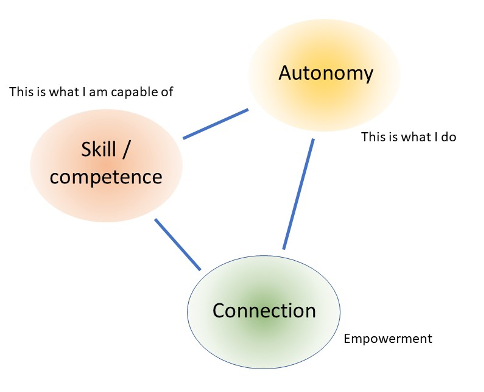
However, in today’s individualised environment, people do not always prioritise connectivity, nor do universities and research institutes consistently cultivate it. Higher education creates highly competitive environments, which can isolate individuals. These conditions limit opportunities to build collaborative and supportive communities, despite widespread recognition that research benefits from cooperation. Researchers rely on prior work and advance knowledge not only by reviewing literature but also by engaging in dialogue with peers; progress depends on fostering enriching, empowering academic communities.
Pilot PhD Roundtable at the IHE Delft Institute for Water Education
Recognising the effect of COVID-19 on PhD connectivity, the IHE Delft PhD Association Board (PAB) highlighted reduced engagement among PhDs. This drew urgent attention to the need for stronger community and support, motivating IHE to create new ways for PhDs to (re-)connect and build peer relationships.
From this recognition, the initial idea emerged: create peer tutor groups, each facilitated by an IHE academic staff member (with a PhD) who is not involved in supervising the group. This would bring objective, experienced facilitation, giving PhDs a safe space to share experiences, opportunities, challenges, and concerns.
Building on this foundation, IHE invited me to co-develop the concept and provide facilitator training tailored to their context. My focus on fostering connection and supporting individuals as they refine their working methods was well-aligned with the aim of empowerment. Guiding questions emerged: how might we tailor this specifically for IHE? How can we further empower the PhD community? How might facilitators leverage their diverse strengths? How can this fit existing commitments?
Most importantly, we aimed to create a safe, supportive environment for PhDs to feel heard and respected. This would enable meaningful peer learning through shared stories, active listening, and collaborative problem solving, forming the core concept of what became known as the PhD Roundtables (PRTs):
PhD Roundtables function as safe spaces that invite PhDs to connect with their peers, while sharing their stories, struggles, and opportunities with each other.
All PhDs received an email explaining the initiative and inviting them to join the PRTs, which included an initial meeting with a facilitator. PhDs could also schedule individual meetings with facilitators as needed. Facilitators had the flexibility to organise sessions in ways that best supported candidates’ personal and professional growth. Instead of directly resolving issues, facilitators listened, encouraged discussion, fostered connections, and guided participants to IHE resources as appropriate.
Key components pilot
The entire process was designed and developed in close collaboration with two representatives from the PhD Programme Committee (PhD-Cie), with whom I formed the task force, and with the facilitators. The PhD Programme Committee representatives chiefly aligned the Roundtables’ goals with institutional objectives. I joined to train facilitators and to support the task force in streamlining project implementation, while facilitators focused on creating supportive and effective peer-learning environments.
We gathered input from PhDs through the PAB (represented in the PhD programme committee), the PRTs, and a survey sent to all PhDs after the pilot. This feedback loop ensured that we considered PhD students’ voices in ongoing adjustments and improvements.
Ultimately, the pilot took three years, after which it became part of the PhD support structure at IHE. The overview below shows the key components of the pilot process.
Before the start of the PRTs:
- Regular meetings with the task force to explore potential ways to further empower the PhD community through the PhD Roundtable pilot.
- Intakes with the facilitators to explain the aim, to get to know the facilitators (their training needs and wishes), understand their strengths and areas for growth (which informed personalised training sessions), and to build trust.
- First training with the facilitators: building an empowering group of facilitators, preparing and aligning them for potential dynamics that might arise within the PRTs (probably not only academic issues), and designing the training so the facilitators could use the form and structure in their own PRTs.
Facilitator Eldon Raj, stated after a training: It was a very productive discussion, a lot of new learning options and new barriers to break – I liked it as much as you all liked. The comments from you (agreed or disagreed and commented) are excellent and I thank you very much. We all will learn, and we will keep learning in this process of peer-transfer of good and bad facilitating experiences. Let’s always wish the best for our PhDs.
During the PRTs:
- Monthly taskforce meetings to safeguard processes (continuity, iteration, and updating) and act on developments.
- Continuation of regular training sessions with facilitators and individual discussions focused on learning opportunities arising from the PRTs and based on facilitators’ needs to develop their roles and the PRTs. We conducted a series of interactive training sessions that enabled facilitators to learn various facilitation techniques and navigate specific group dynamic situations. As always, the design was crafted to allow form and structure to be utilised in their own sessions with PhDs.
- This ongoing process of enhancing facilitators’ skills has helped them become better equipped to support their PhDs effectively and, consequently, foster a more connected and empowered PhD community.
- Intervision facilitators: these sessions served as peer-led learning and reflection moments for the facilitators to address challenging situations and professional development issues.
- Joint meeting with the task force and facilitators to share feedback and keep each other up to date.
Throughout this process, I acted as a process facilitator and as a trainer/coach for the facilitators. I translated insights into concrete steps and supported their implementation with a practical plan. To ensure smooth operation and continual improvement, I provided best practices, supported decision-making, and championed progress. While IHE executed these steps, I fostered facilitator growth through training, intervision, and one-on-one coaching. My work spanned several areas, including process guidance, strategic alignment, coaching, training, reporting, and planning.
Keywords that suit my role: encouragement, optimisation, positivity, opportunity, responsibility, expert advice, support, coaching, and a deep understanding of the process and oversight.
Looking ahead, the continued success of the PhD Roundtables depends on the ongoing dedication of all involved to nurture connectivity, empowerment, and a supportive academic environment for future PhD candidates.
Reflection
As with any process, we made ongoing adjustments to improve the PRTs and address various challenges effectively. For instance, facilitator turnover due to competing obligations or workload changes was mitigated by initially having a surplus of facilitators available, enabling the reassignment of PhDs. However, the process did not always run smoothly due to limited time within the task force to inform facilitators and PhDs, and to ensure that there was no involvement whatsoever in supervisory teams. Logistical challenges arose from frequent absences by both facilitators and PhDs, often due to fieldwork abroad in IHE’s international context. We adopted hybrid meeting formats to enable flexible participation, but this may not always have achieved the same level of engagement and safety as face-to-face meetings. Also, high workloads and deadlines sometimes reduced the priority given to PRT participation. As a result, the frequency and continuity of the pilot were difficult to maintain, which certainly reduced interest and involvement among some of the PhDs, and did not allow every PhD Roundtable to prove itself.
These experiences taught us the value of maintaining a flexible though continual schedule, having extra facilitators on hand, and being flexible in switching between (non-)digital formats. Furthermore, regular check-ins and updates proved crucial for keeping the task force, facilitators, and PhDs engaged and focused.
Nevertheless, in retrospect, these are the empowering aspects of the PRTs:
- Stimulating sharing experiences amongst peers.
- Stimulating the use of existing organisational bodies, functions, and persons at IHE.
- Sharing and recognising each other’s stories as hearing alternative ways of coping and helps to put things into perspective.
- Raising connectivity between PhDs and fostering meaningful relationships.
- Providing the feeling of being part of a larger (PhD and IHE) community.
- Learning to express oneself, asking the right questions, and listening to others’ experiences.
- Considering a PhD as a broader (not purely academic) learning process.
A survey conducted among PhD participants showed that they valued meeting peers from other departments, backgrounds, and cohorts, as well as sharing experiences and perspectives. This group support enabled meaningful exchanges and deepened participants’ understanding of the diverse experiences of staff and fellow candidates. Overall, participants regarded the PRTs as a valuable platform for professional and collegial interaction.
Future of the PhD Roundtables
This pilot provided numerous learning opportunities for all participants. It is now up to the IHE to further develop this initiative; raise awareness of it within the institute, enhance effectiveness, and create clarity about ‘what to expect’ from the PhD Roundtables to increase engagement among its PhDs. To increase PhD participation, the initiative is being further developed by adding some topic-focused meetings for all PhDs to the existing PhD Roundtables.
The PhD Roundtables can serve as an active support structure for PhDs, in which every PhD is seen and heard, thereby strengthening the PhD community, fostering connections and peer-to-peer learning.
What’s the situation like at your university or institute?
Is connectivity stimulated, and are there safe settings in which peer-to-peer learning can occur? Is a PhD community being actively developed?
If you would like to learn more about this initiative, please contact me to discuss things further.
Additional information
- After: Ryan, R. M., & Deci, E. L. (2017). Self-determination theory: Basic psychological needs in motivation, development, and wellness. The Guilford Press. https://doi.org/10.1521/978.14625/28806 ↩︎